

Influential Women honors Raquel Dias: advancing AI-driven genomics and precision medicine at University of Florida.
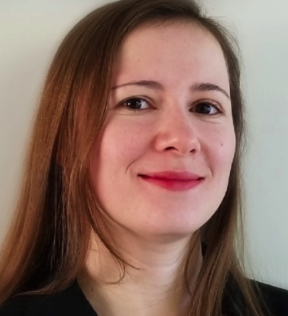
Raquel Dias is an accomplished Assistant Professor in the Microbiology and Cell Science Department at the University of Florida in Gainesville, where she has led her own laboratory since January 2022. Her research sits at the forefront of computational biology, integrating artificial intelligence, machine learning, and advanced data science approaches to address some of the most complex challenges in human health, genomics, and precision medicine. As part of the University of Florida’s AI initiative—a major collaboration with NVIDIA supported by a $70 million investment to build a state-of-the-art supercomputer and recruit leading faculty—Raquel is pioneering new computational methods to analyze large-scale genomic and clinical datasets in order to better understand the underlying drivers of multifactorial diseases.
Her work focuses on transforming how biological and clinical data are interpreted, moving beyond traditional approaches to identify hidden patterns in genetic and molecular systems. By leveraging machine learning models and high-performance computing, Raquel and her team are developing tools that can improve disease prediction, uncover biological mechanisms, and contribute to more personalized approaches to healthcare.
Raquel’s scientific journey began in Brazil, where she earned a Bachelor’s Degree in Biological Sciences and a Master’s Degree in Computer Science from the Pontifical Catholic University in southern Brazil. During this time, she gained early experience in high-performance computing and machine learning, developing a unique interdisciplinary foundation that combined computational expertise with biological inquiry.
Raquel later pursued a PhD in Microbiology and Cell Science at the University of Florida, where she developed machine learning tools to study protein-ligand interactions and explored the role of the human gut microbiome in Type 1 Diabetes. Her doctoral research laid the groundwork for her continued interest in applying artificial intelligence to complex biological systems.
Following her PhD, Raquel held a postdoctoral position at Northern Arizona University, where she focused on genetic variants and cancer research within Native American communities. She later joined the Scripps Research Institute as a senior staff scientist, where she applied AI techniques to clinical genomics, including research on coronary artery disease risk prediction. Across each stage of her career, she has continued to build expertise at the intersection of computation, biology, and human health.
In addition to her research accomplishments, Raquel is a recognized mentor and award-winning scientist. She is a recipient of Brazil’s Young Scientist Prize and an NIH K-type career development award, both of which reflect her contributions to advancing scientific understanding and her commitment to mentoring the next generation of researchers.
Raquel attributes her success to the strong support system she has had throughout her life and career. She credits her parents and her older brother for encouraging her early interest in programming and technology, often through shared experiences with video games and friendly competition that sparked her curiosity in coding. A pivotal influence was her high school science teacher, Patricia Silva, who recognized her potential early on and encouraged her to pursue ambitious goals, telling her she would go far in her career.
Another major mentor was Dr. Eric Triplett, who believed in Raquel as a young scientist from Brazil and opened doors for her to pursue research opportunities in the United States. He accepted her into a PhD program and later advocated for her return to the University of Florida, helping to shape the trajectory of her academic career.
Raquel also highlights the transformative experience of attending her first international scientific conference after receiving the Young Scientist Prize. There, she witnessed a deeply collaborative global research community where scientists actively shared ideas, built upon one another’s work, and supported collective discovery. This experience reinforced her belief that science is most powerful when driven by collaboration rather than competition.
Her passion for technology, video games, and science fiction—combined with a lifelong curiosity about the Human Genome Project and life sciences—provided her with the motivation to continue pursuing research even in the face of challenges.
The best career advice Raquel ever received came from her high school science teacher, Patricia Silva, who told her she had immense potential and would achieve great success in her field. That message became a defining moment in her life, giving her confidence to pursue science and technology with determination. Raquel recalls that this encouragement helped her persist even when she was often the only woman in academic and professional environments dominated by men.
Raquel encourages young women entering computer science and related fields to believe in their abilities and remain persistent despite challenges. She emphasizes that mentorship is essential and that finding supportive role models can make a profound difference. While acknowledging that women in STEM may still face bias or underrepresentation, she encourages them not to be discouraged by these barriers. Instead, she urges them to remain focused on their goals, build strong networks, and continue pushing forward with resilience and confidence.
Raquel also recognizes that gender disparity remains one of the biggest challenges in her field. During her master’s studies in computer science, she was frequently the only woman in her classes. In professional settings, including research meetings, she sometimes experienced additional scrutiny compared to her male counterparts. She observes that this imbalance reflects a broader structural issue in male-dominated disciplines, where women are often required to repeatedly prove their expertise in ways that are not equally expected of men.
Despite these challenges, Raquel notes positive progress over the past decade, with increasing awareness of diversity, equity, and inclusion in scientific communities. She believes that the growing emphasis on interdisciplinary collaboration and diverse perspectives represents a meaningful opportunity for transformation in the field.
At the core of Raquel’s scientific philosophy are the values of openness, honesty, transparency, and collaboration. She believes that meaningful scientific progress depends on collective effort rather than competition. In her view, research advances most effectively when scientists work together, share knowledge, and build upon each other’s discoveries.
These principles also played a key role in her decision to return to the University of Florida, where she found a research environment aligned with her values. Raquel carries these same principles into her personal life, where she emphasizes loyalty, transparency, and mutual support within her family. She considers family a central part of her life and strives to maintain balance between her professional responsibilities and personal well-being.
Outside of her academic work, Raquel enjoys spending time with her husband and young son, as well as engaging in hobbies such as 3D printing, science fiction, and video games—interests that continue to reflect her lifelong curiosity and creativity.
Guided by a commitment to openness, collaboration, and rigorous scientific inquiry, Raquel Dias continues to advance AI-driven innovation in genomics and clinical research. Through her work at the University of Florida, she is not only pushing the boundaries of computational biology but also helping to train and inspire the next generation of scientists in artificial intelligence and life sciences.
Learn More about Raquel Dias:
Through her Influential Women profile, https://influentialwomen.com/connect/Raquel-Dias, or through her profile on the University of Florida, https://microcell.ufl.edu/about-us-/people/raquel-dias/
Influential Women
Influential Women provides a platform where women from all backgrounds can connect, share their perspectives, and create content that empowers themselves and others. Through storytelling, thought leadership, and creative expression, Influential Women amplifies voices that inspire change.
Editorial Team
Influential Women
email us here
Legal Disclaimer:
EIN Presswire provides this news content "as is" without warranty of any kind. We do not accept any responsibility or liability for the accuracy, content, images, videos, licenses, completeness, legality, or reliability of the information contained in this article. If you have any complaints or copyright issues related to this article, kindly contact the author above.
